
Archiving construction stages in 3D: legal protection for the developer
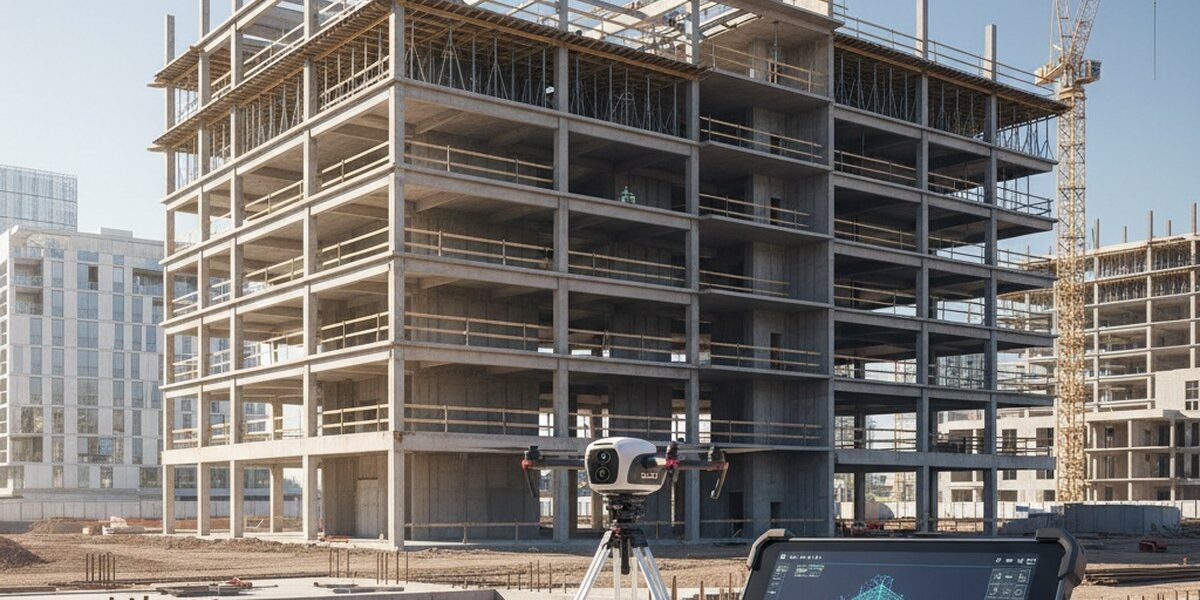
3D construction archiving is not just a beautiful picture, but a powerful tool for developers that provides legal protection and transparency at all stages of the project. At 360° Space, we have been working with developers for many years, and we know how important it is to have irrefutable evidence of completed works and the current state of the object. A virtual tour allows you to capture the smallest details that can later play a decisive role.
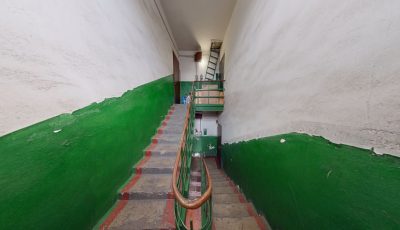
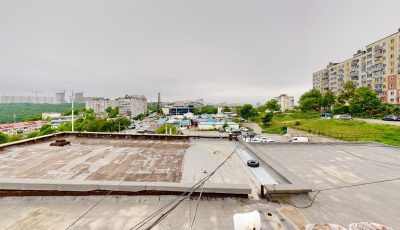
Imagine having the ability to return to any point on a construction site at any time. This is what 3D archiving provides. We create accurate digital twins of objects, accessible at any time from anywhere in the world.
Why construction needs a 3D virtual tour
Implementing 3D virtual tours on a construction site brings a number of tangible benefits to the developer, going far beyond a simple presentation:
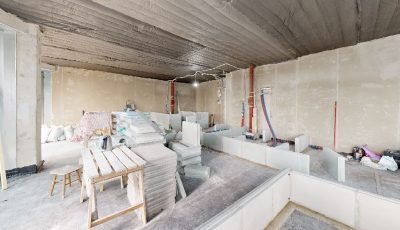
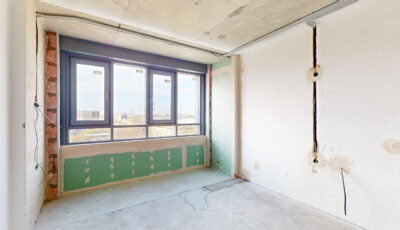
- Legal protection against claims. This is perhaps the most important point. A 3D virtual tour records every stage of work, the condition of hidden communications, and the quality of installation. In case of disputes with contractors, suppliers, or even equity holders (for example, regarding the quality of finishing), you will have undeniable proof. We have encountered situations where 3D fixation allowed developers to save up to 15% of the cost of disputed works, preventing unjustified payments.
- Remote object control and reduction of travel costs. If you have several facilities in different regions, like our client from Krasnodar, 3D virtual tours become an indispensable tool for remote control. A project manager or investor can "walk through" the construction site, assess progress, and identify problems without the need for personal presence. This saves up to 30% of time and money on business trips.
- Optimizing interaction with investors and partners. Investors always want to see where their money is going. Regular 3D reports show the transparency of the process and construction progress. This increases trust and strengthens partnerships. We have seen projects receive additional funding thanks to such transparent reporting.
- Staff training and safety briefing. New employees can study the object in a virtual space before going to the site, which reduces adaptation time. Virtual walks through dangerous areas can be part of safety briefings, reducing risks by 20-25%.
- Effective resolution of conflict situations. When defects or discrepancies with the project are identified, a 3D virtual tour allows you to accurately determine the location and nature of the problem, as well as who is responsible for its occurrence. This speeds up the decision-making process and minimizes downtime, saving up to 10% of working time.
These advantages make 3D archiving not an expense, but an investment that pays off many times over.
How it works
The process of creating a 3D virtual tour for archiving construction stages is well-established and efficient:
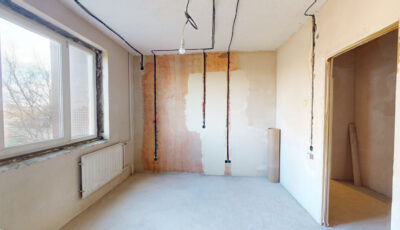
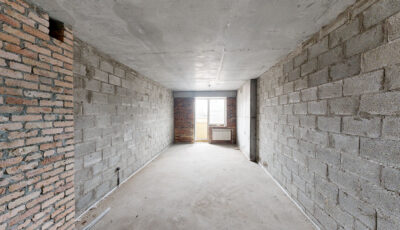
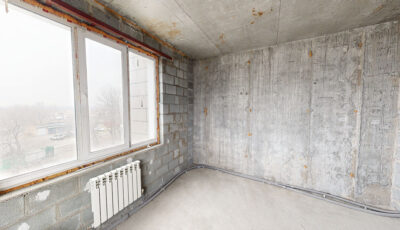
1. Planning and coordination. We start with a detailed discussion of your tasks and construction schedule. We determine the key stages that need to be recorded, and the frequency of shooting (for example, once a month, after the completion of certain types of work, or upon request). This can be the fixation of the foundation, hidden communications, frame, rough and fine finishing. For a large object with an area of 20,000 m², we can plan up to 10 fixation points to cover all critical stages.
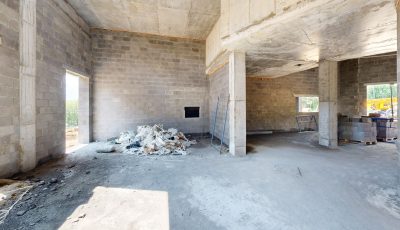
2. Shooting process. Our specialists visit the site with professional equipment – these are 3D cameras, for example, Matterport Pro3 or Insta360 Pro2, which allow for quick and accurate scanning of the space. Shooting one floor of medium area (about 1500 m²) takes from 4 to 8 hours, depending on the complexity and number of obstacles. We take dozens, and sometimes hundreds of panoramic shots, which are then "stitched" together into a single whole.
3. Processing and creation of a 3D model. After shooting, the data is uploaded to specialized software. Here, panoramas are "stitched" together, a 3D model (point cloud and mesh) is built, and interactive points of interest are added (e.g., photos of problem areas, comments, links to documentation). This stage takes 1 to 3 business days, depending on the volume of data.
4. Delivery and placement of the virtual tour. We offer several options for hosting the finished 3D virtual tour. The most common is our 360° Space cloud, which provides high-speed content delivery and technical support. The virtual tour can also be deployed on the customer's server, which gives full control over the data. For situations where there is no internet access (for example, at off-site presentations or in demonstration offices), we can prepare an autonomous version for PC or a separate build for a VR headset. The flexibility of hosting formats allows you to choose the optimal solution for any task.
5. Access and use. The finished 3D virtual tour is available via a link, it can be embedded on your website, sent to partners, or used in closed project management systems. You can measure distances, add notes, compare object states at different stages. This is a living, interactive document that is constantly updated.
How much does it cost
The cost of 3D construction archiving depends on several factors: the total area of the object, the number of fixation stages, the chosen equipment (Matterport Pro2 for indoor spaces or Pro3 for large open spaces), and additional options (e.g., integration with BIM models, creation of floor plans).
Typically, the price for one shooting session starts from 15,000 rubles for small objects (up to 500 m²) and can reach 100,000 rubles or more for large industrial complexes or residential areas where several days of work are required. For example, to fix one stage of construction of a residential building with an area of 5000 m², the cost can be about 50,000 – 70,000 rubles, including processing and placement.
We always approach each project individually and are ready to offer the optimal solution for your budget and tasks. To accurately calculate the cost of your project, use our online calculator or contact us for a consultation.
Frequently asked questions
Q: How often should scanning be done for archiving?
A: The frequency of shooting depends on the construction speed and the criticality of the stages. This usually happens once a month or upon completion of key works (e.g., foundation pouring, frame erection, installation of engineering systems). We will help you create an optimal schedule for your facility.
Q: Can 3D virtual tours be integrated with BIM models?
A: Yes, it's possible! We can not only create 3D virtual tours but also export data in formats compatible with BIM systems, which allows comparing project documentation with the actual state of the object. This significantly increases control accuracy and simplifies the identification of deviations.
Q: How long is 3D virtual tour data stored?
A: When hosted on our 360° Space cloud, data is stored on our servers indefinitely as long as you are our client. If you choose to host on your own server, the storage period is entirely determined by your infrastructure. We can also provide an offline version of the virtual tour that you can store on your own media.
Order a 3D tour for your property
Leave your contact — we'll respond within 30 minutes and calculate the cost